Key takeaways
- An Amazon warehouse associate (a “fulfillment associate”) rotates through core process paths, receive, stow, pick, pack, sort and ship, and is judged on productivity rate, quality and safety, not just “working in a warehouse”.
- The associates who get hired and promoted prove numbers: units per hour versus target, pick and pack accuracy, safety record, cross-training and attendance.
- Most warehouse applications are read by software first, mirror the job posting’s exact terms (pick, stow, RF scanner, PIT, units per hour) and keep the format clean to get past it.
- Run your resume through our free ATS resume checker before you apply.
If you have searched for an amazon warehouse associate job description, you are probably doing one of two things: working out what the role actually involves before you apply, or trying to turn months of picking, packing and stowing into a resume that gets you shortlisted. This guide covers both. It breaks down exactly what an Amazon warehouse associate does across a fulfillment center, the duties and responsibilities hiring teams expect, the skills that matter most, what the role pays, and, most importantly, how to present that experience on a resume that beats the applicant tracking system (ATS) and impresses the human who reads it next.
What does an Amazon warehouse associate do?
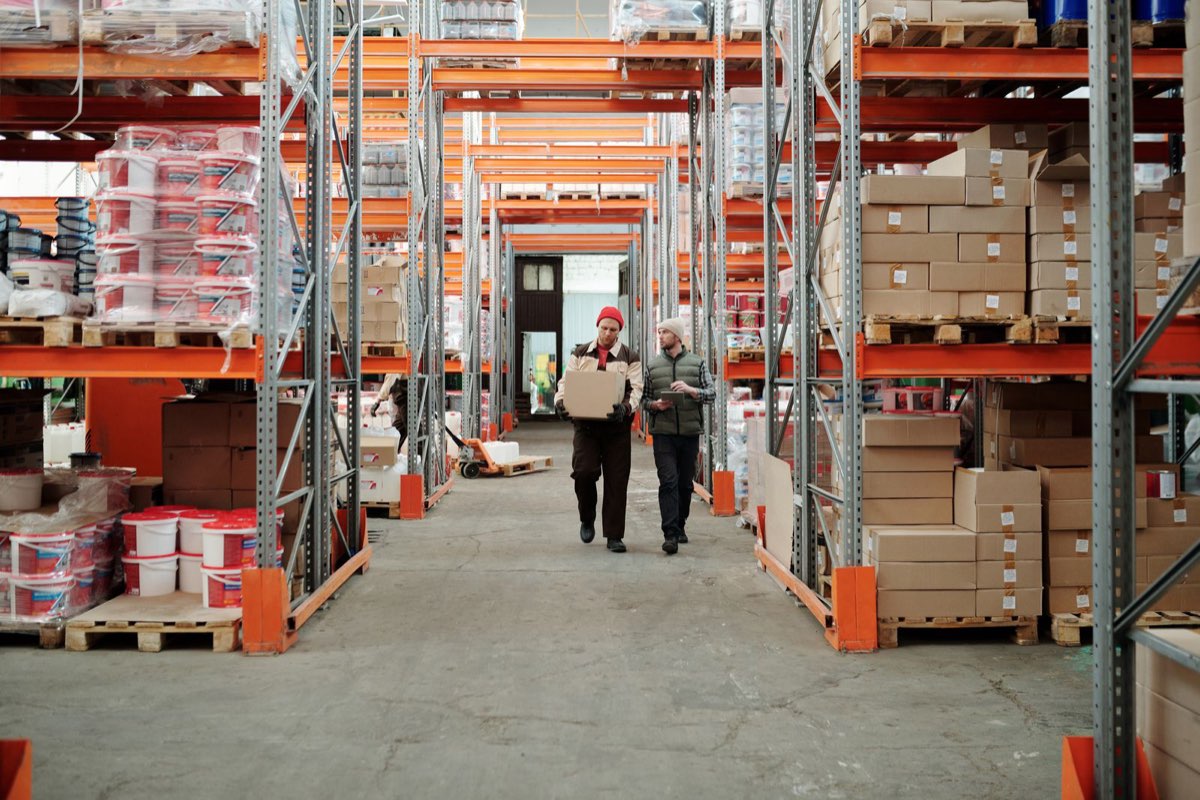
An Amazon warehouse associate, you will also see the titles “fulfillment associate”, “warehouse team member” or “sortation associate”, keeps Amazon’s fulfillment network moving so that customer orders ship on time. The exact work depends on the building. A fulfillment center (FC) stores millions of individual items and packs single orders; a sortation center (SC) sorts finished packages by destination; and a delivery station (DS) stages packages for the last-mile route. Across all of them, associates rotate through the core process paths: receive (unloading inbound trailers and scanning stock into inventory), stow (placing items into bins or robotic pods), pick (retrieving items to fill orders, guided by a handheld RF scanner), pack (boxing items and applying shipping labels), sort (routing packages to the right lane), and ship (loading outbound trailers).
What makes the Amazon version of the role distinct is that almost every action is scanned and measured. Associates work to a productivity rate, usually units per hour (UPH), while holding a quality standard (a low defect or error rate) and following strict safety procedures, often working alongside Amazon Robotics drive units. That commercial framing matters for your resume. Hiring managers are not looking for someone who “worked in a warehouse”; they are looking for someone who can hit rate, keep quality high, stay safe, and show up reliably shift after shift. Everything below is built to help you prove exactly that.
Amazon warehouse associate duties and responsibilities
Responsibilities shift with the building type, the process path and the shift, but almost every Amazon warehouse associate job description includes the core duties below, and understanding why each one matters helps you write stronger resume bullets.
| Duty | Why it matters to employers |
|---|---|
| Receiving and unloading inbound trailers, scanning stock into inventory | Accurate receiving keeps inventory records correct so orders can be promised and fulfilled |
| Stowing items into bins or Amazon Robotics pods | A correct stow means items can be found and picked fast, mis-stows create defects and delays |
| Picking items to fill customer orders against an RF handheld scanner | Pick rate and accuracy directly drive shipping speed and the Prime delivery promise |
| Packing, boxing and applying shipping (SLAM) labels | Correct packing protects products and prevents costly returns, damage claims and re-ships |
| Sorting packages by route and zone for the correct delivery path | Sortation accuracy prevents mis-ships and keeps last-mile deliveries on schedule |
| Meeting productivity (units-per-hour) and quality targets | Rate and defect rate are how the building measures throughput, cost and reliability |
| Following safety, ergonomic and lifting procedures on the robotics floor | Reduces injuries and lost time, a direct safety, morale and cost priority |
| Flexing across paths and supporting peak (Prime Day, Q4) volume | Cross-trained, reliable associates keep the network running when demand spikes |
Skills employers look for
The strongest warehouse resumes pair hard, teachable skills with the soft skills that keep a fast-moving floor safe and productive. Name the specific ones that appear in the job posting, that keyword match is what the ATS scores you on.
| Hard skills | Soft skills |
|---|---|
| Order picking & RF/handheld scanner use | Reliability & consistent attendance |
| Packing, labeling & SLAM processes | Working at pace & physical stamina |
| Stowing, receiving & inventory accuracy (WMS) | Attention to detail & accuracy under a rate |
| Powered industrial truck (PIT) / pallet jack, where certified | Teamwork & clear communication |
| Safety, ergonomics & correct lifting technique | Adaptability across process paths and shifts |
“Warehouse resumes get overlooked because they read like a list of chores. The ones that win interviews put a number next to the work, units per hour, pick accuracy, days without a safety incident. One rate you actually hit beats a paragraph of duties.”
, ResumeCroc resume team
How much do Amazon warehouse associates earn?
Amazon warehouse roles are hourly, and take-home pay moves with the site, the region, the shift and the season. Night, weekend and “anytime” shifts usually carry a differential, and overtime climbs sharply during peak events like Prime Day and the Q4 holiday surge, when buildings run mandatory and voluntary extra time. For national context, the U.S. Bureau of Labor Statistics puts the median wage for stockers and order fillers at roughly $37,330 a year, and for hand laborers and material movers at about $40,240, but Amazon’s own starting rates, shift premiums and peak overtime move the real figure around.
Typical hourly pay progression (illustrative)
Relative pay grows with shift differential, cross-training and certifications, exact figures vary by site, region and season.
Directional, based on U.S. Bureau of Labor Statistics occupation data ($37,330-$40,240 median) and typical warehouse shift and overtime structures.
The takeaway for your resume: if you held a night or weekend shift, cross-trained across paths, earned a PIT certification, or stepped up as a process guide or trainer, put those front and centre. They are the fastest way to justify a higher rate and stand out from other applicants who only list “picked and packed orders”.
How to put warehouse experience on your resume (5 steps)
The biggest mistake applicants make is listing duties instead of achievements. Anyone can “pick and pack orders”, what gets interviews is measurable impact. Follow these five steps.
Mirror the job posting’s keywords
Pull the exact terms from the listing, pick, stow, receive, sort, units per hour, RF scanner, PIT, SLAM, WMS, and use them where they truthfully apply. This is what the ATS scores.
Do: “Picked and stowed 300+ units per hour using an RF scanner” · Not: “Moved boxes around the warehouse”
Lead every bullet with a strong action verb
Start with verbs like exceeded, maintained, reduced, unloaded, trained, sorted, never “responsible for”.
Do: “Exceeded pick-rate target by 15% across peak season” · Not: “Responsible for picking”
Quantify the impact
Add a number to every achievement you can: units per hour versus target, pick or pack accuracy, packages per shift, safety record, or attendance.
Example: “Maintained 99.8% pick accuracy at 320 UPH while supporting Prime Day volume with zero safety incidents.”
Show progression and trust
Cross-training across paths, PIT certification, becoming a process guide, area ambassador or trainer, and strong attendance all signal reliability and leadership, exactly what buildings promote.
Example: “Cross-trained on receive, stow and pack; trained 8 new associates and covered as process guide during peak.”
Keep the format ATS-clean
Avoid tables, columns, text boxes and graphics in the resume file itself, they confuse parsers. Use simple headings and bullets, then verify.
Check it free: ATS resume checker
How your resume actually moves through hiring
Understanding the journey explains why formatting and keywords matter so much. Even for high-volume warehouse roles, your resume usually passes through four stages before you get a call:
Will your resume pass the ATS?
Paste your resume and a job description into our free checker for an instant ATS score, the keywords you are missing, and prioritised fixes, all in your browser, nothing uploaded.
Frequently asked questions
Do you need experience to become an Amazon warehouse associate?
No, most Amazon warehouse associate roles are entry-level and require no prior warehouse experience. Buildings hire for reliability, consistent attendance, the ability to work at a steady pace, and the physical capacity to stand for a full shift and lift up to about 49 pounds. If you are new, emphasise transferable strengths from any customer-facing, physical, team or shift-based work, and show you can learn a scanner-tracked process quickly.
What is the difference between an Amazon warehouse associate and a general warehouse associate?
An Amazon warehouse associate typically works a specific process path, pick, pack, stow or sort, at a high, scanner-tracked rate inside a fulfillment, sortation or delivery building, often alongside Amazon Robotics. A general warehouse associate role is usually broader and less specialised, covering receiving, inventory and shipping across a smaller site. The core skills overlap heavily; for the wider version of the role, see our warehouse associate job description.
How do I make my warehouse resume stand out?
Quantify your results (units per hour, pick and pack accuracy, safety record, attendance), mirror the keywords in the job posting, show cross-training and progression, and keep the format clean so it parses correctly. The achievement-led structure in our customer service resume sample transfers directly, swap the customer metrics for rate, accuracy and safety numbers.
Want an expert to do it for you?
Our writers rebuild your resume to beat ATS filters and impress the human reading it. Start with a free, no-obligation expert review of your current resume.

 By uploading my resume, I agree to the