Before you apply, get a free expert review of your resume within 48 hours. See exactly what is holding it back, with an ATS check and real rewrite examples. No credit card, no obligation.
Get my free resume reviewKey takeaways
- A dental assistant supports the dentist chairside, sterilizes instruments and operatories, and often takes radiographs, charts, and handles scheduling too. The role blends clinical support with administrative duties.
- Certification requirements vary by state. Many employers expect a DANB Certified Dental Assistant (CDA) credential or a state-approved radiography certification before you can take x-rays unsupervised.
- The strongest dental assistant resumes prove chairside speed, sterilization compliance, and patient comfort with real numbers, not a list of duties.
- Most applications are filtered by software first, so mirror the job posting’s keywords and keep the format clean to get past it.
- Run your resume through our free ATS resume checker before you apply.
Dental assistant is one of the most in-demand roles in any dental practice, and postings for it draw a wide range of applicants, from career-changers finishing a short certificate program to assistants with a decade of chairside experience. Whether you are a practice manager writing the job description or a candidate turning clinical training into a resume that gets interviews, this guide covers exactly what a dental assistant does, the duties and responsibilities employers expect, the skills and certifications that matter most, what the role pays, and how to present all of it on a resume that beats the applicant tracking system (ATS).
Unlike many entry-level roles, dental assisting sits at the intersection of clinical care and compliance. A dentist is legally responsible for the treatment provided, and a well-trained assistant is what keeps that treatment safe, efficient, and properly documented. That is exactly the framing your resume needs: not “helped the dentist,” but “kept treatment on schedule while meeting infection-control and documentation requirements.”
What does a dental assistant do?
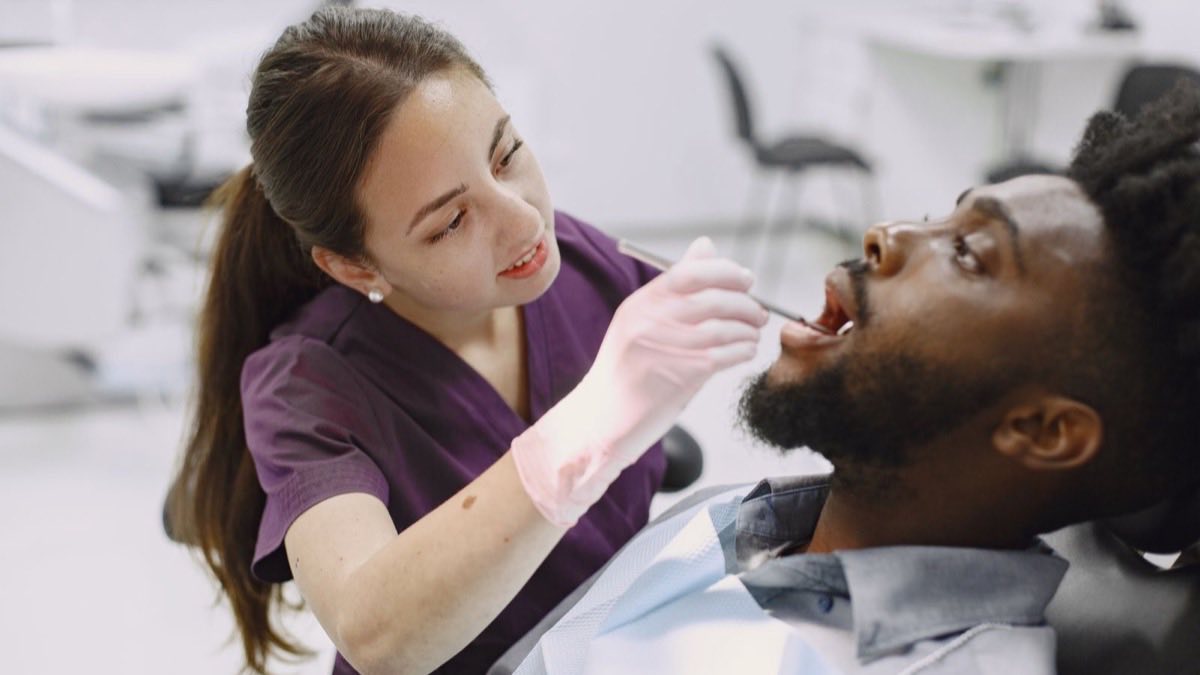
A dental assistant works directly alongside the dentist during exams, cleanings, and procedures, in what is often called “four-handed dentistry” because the assistant’s hands are as much a part of the procedure as the dentist’s. That includes passing and retrieving instruments, suctioning, retracting cheeks and tongue for visibility, and mixing or prepping dental materials on request, all while keeping the patient calm and the appointment moving. Between patients, the assistant sterilizes instruments, disinfects the operatory, and resets the room so the next appointment can start on time.
But the role is bigger than chairside support. Most dental assistants also take and process radiographs, chart the dentist’s findings and treatment notes, review medical and dental histories for anything that changes treatment, and in many practices handle scheduling, patient intake, insurance forms, and supply ordering. That combination of clinical precision and administrative reliability is exactly what a hiring dentist is screening for, and it is exactly what your resume needs to prove: not just that you assisted, but that the practice ran smoothly and compliantly because you were in the room.
Dental assistant duties and responsibilities
Duties shift depending on practice size, specialty (general, orthodontic, oral surgery, pediatric), and state scope-of-practice rules, but almost every dental assistant job description includes the core duties below. Understanding why each one matters to an employer helps you write sharper resume bullets.
| Duty | Why it matters to employers |
|---|---|
| Chairside (four-handed) assisting: passing instruments, suctioning, retraction | Keeps procedures on schedule and reduces chair time per patient |
| Sterilizing instruments and disinfecting operatories between patients | Protects the practice from OSHA violations and cross-contamination risk |
| Taking and processing dental radiographs (x-rays) | Speeds diagnosis and requires state-compliant certification, a direct compliance point for the practice |
| Preparing and seating patients, reviewing health history | Reduces treatment delays and flags medical-alert issues before treatment starts |
| Charting the dentist’s findings, treatment notes, and periodontal readings | Creates the accurate clinical record insurers, specialists, and audits depend on |
| Scheduling appointments, patient records, and ordering dental supplies | Keeps the practice running without downtime, no-shows, or lost revenue |
Skills employers look for
The strongest dental assisting resumes pair hard, certifiable skills with the soft skills that keep an anxious patient calm and a busy schedule on track. Name the specific software, certifications, and procedures listed in the posting where they truthfully apply, that keyword match is what the ATS scores you on.
| Hard skills | Soft skills |
|---|---|
| Chairside / four-handed assisting | Patient communication & bedside manner |
| Sterilization & infection-control protocols (OSHA) | Calm, steady presence under pressure |
| Dental radiography (x-rays) | Attention to detail |
| Charting & practice software (Dentrix, Eaglesoft, Open Dental) | Teamwork with dentists and hygienists |
| Instrument and material prep (impressions, sealants, temporaries) | Time management across a full daily schedule |
“Dental assisting resumes that win interviews prove chairside speed and compliance, not just a list of duties. A sterilization record with zero incidents, patients moved through on schedule, a radiography certification listed up top: that is what tells a hiring dentist you will not need to be retrained.”
ResumeCroc resume team
How much do dental assistants earn?
The median annual wage for dental assistants (SOC 31-9091) is $47,300, according to the U.S. Bureau of Labor Statistics. Pay generally rises with certification (a DANB Certified Dental Assistant credential or state radiography permit), years of chairside experience, and whether the role includes expanded functions: some states allow assistants with additional training to place fillings, apply sealants, or take impressions independently, which typically commands higher pay than general chairside duties alone.
Typical pay progression (illustrative)
Relative pay grows with certification and experience, exact figures vary by state, specialty, and employer.
Directional, based on U.S. Bureau of Labor Statistics occupation data and typical dental practice pay structures.
The takeaway for your resume: if you hold a CDA credential, a state radiography certification, or expanded-function training, put it at the top, not buried at the bottom. In a compliance-driven field like dentistry, credentials are often the first thing a hiring dentist screens for.
How to put dental assistant experience on your resume (5 steps)
The biggest mistake applicants make is listing tasks instead of proving reliability and compliance. Anyone can write “assisted the dentist,” what gets interviews is evidence that patients, procedures, and paperwork all moved smoothly because you were there. Follow these five steps.
Lead with your certifications
List your CDA credential, state radiography certification or permit, CPR/BLS certification, and any expanded-function training near the top of your resume, before your work history if space allows. Dental practices screen for licensure compliance first.
Do: “CDA (DANB) · State-certified in dental radiography · CPR/BLS certified” · Not: burying certifications in a footnote
Mirror the job posting’s keywords
Pull the exact terms from the listing (the practice software, “four-handed dentistry,” “expanded functions,” specific procedures) and use them where they truthfully apply. This is what the ATS scores.
Do: “Assisted chairside using Dentrix for charting and scheduling” · Not: “Helped out around the office”
Lead every bullet with a strong action verb
Start with verbs like assisted, sterilized, charted, prepped, streamlined, coordinated, never “responsible for.”
Do: “Prepped and sterilized operatories between 25+ daily patients” · Not: “Responsible for keeping rooms clean”
Quantify the impact
Add a number wherever you honestly can: patients seen per day, chair turnover time, sterilization compliance record, radiographs taken, or a reduction in no-shows from better scheduling.
Example: “Maintained a zero-incident sterilization record across 3 years while supporting 20 to 25 patient visits daily.”
Keep the format ATS-clean
Avoid tables, columns, text boxes, and graphics in the resume file itself, they confuse parsers. Use simple headings and bullets, then verify before you submit.
Check it free: ATS resume checker
How your resume moves through hiring
Understanding the journey explains why certifications, keywords, and formatting all matter. Your resume usually passes through four stages before you get a call:
Will your resume pass the ATS?
Paste your resume and a job description into our free checker for an instant ATS score, the certifications and keywords you are missing, and prioritized fixes, all in your browser, nothing uploaded.
If you are building toward a broader allied-health career, or want a specialist to translate your certifications and clinical experience into an ATS-ready resume, our healthcare resume writing service is built specifically around licenses, certifications, and patient-care outcomes.
Frequently asked questions
Do you need certification to become a dental assistant?
It depends on the state. Some states allow entry-level dental assistants to start with on-the-job training, while others require a state-approved program or a specific radiography certification before you can take x-rays. Most employers strongly prefer, or require, a DANB Certified Dental Assistant (CDA) credential, so check your state dental board’s requirements before applying.
What is the difference between a dental assistant and a dental hygienist?
A dental assistant supports the dentist chairside, handles sterilization, radiographs, and often administrative tasks, and works under the dentist’s direct supervision. A dental hygienist is separately licensed to perform cleanings, scaling, and periodontal care independently. For a closely related role, see our dental hygienist resume sample.
Can dental assistants take x-rays?
In most states, yes, but only after meeting that state’s specific radiography training or certification requirement. Requirements range from a short state exam to a full DANB Radiation Health and Safety component. Always confirm your state’s current rules, since they change and vary widely.
What software do dental assistants need to know?
Practice management and charting software comes up constantly in job postings, most often Dentrix, Eaglesoft, or Open Dental. If you have used any of them, name the specific system on your resume rather than a generic “computer skills” line, it is a keyword recruiters and the ATS both look for.
How do I make my dental assistant resume stand out?
Lead with your certifications, quantify your patient volume and sterilization record, mirror the keywords in the job posting, and keep the format clean so it parses correctly. Compliance-heavy roles like this one are screened for licensure first, so do not bury it at the bottom of the page.
Is dental assisting a good career to start in?
It can be a strong entry point into healthcare: training is shorter than for many clinical roles, demand is steady, and experienced assistants can move into expanded-function roles, office management, or further study toward dental hygiene. Employment in the field is projected to keep growing faster than the average for all occupations.
Want an expert to do it for you?
Our writers rebuild your resume to beat ATS filters and impress the dentist or office manager reading it. Start with a free, no-obligation expert review of your current resume.
 By uploading my resume, I agree to the