Before you apply, get a free expert review of your resume within 48 hours. See exactly what is holding it back, with an ATS check and real rewrite examples. No credit card, no obligation.
Get my free resume reviewKey takeaways
- A welder joins, cuts, and repairs metal using processes like MIG, TIG, stick, and flux-core welding, the role is judged on weld quality, code compliance, and safety, not just “sticking metal together.”
- The best-paid welders prove measurable value: AWS certifications, the processes and positions they can run, blueprint and welding-symbol literacy, and a clean safety and inspection-pass record.
- Most applications are read by software first, so mirror the exact keywords in the job posting (MIG, TIG, SMAW, GTAW, AWS certified, blueprint reading) and keep the resume format simple.
- Run your resume through our free ATS resume checker before you apply.
A clear welder job description is the foundation of a productive, safe fabrication shop, construction site, or manufacturing line, and understanding it matters just as much for anyone turning welding experience into a resume that actually gets interviews. Welders join, cut, and repair metal parts by melting and fusing them, or by using heat and a filler metal to bond them, so the finished piece meets a blueprint, a code, and a safety standard. Whether you are an employer writing the posting or a welder building a resume, the role is best understood in terms of certified skill, code compliance, and safety, not simply “welding stuff together.” Below we break down exactly what a welder does, the duties employers list, the processes and certifications that matter most, what the role pays according to the latest federal data, and how to present all of it on a resume that beats the applicant tracking system (ATS).
What does a welder do?
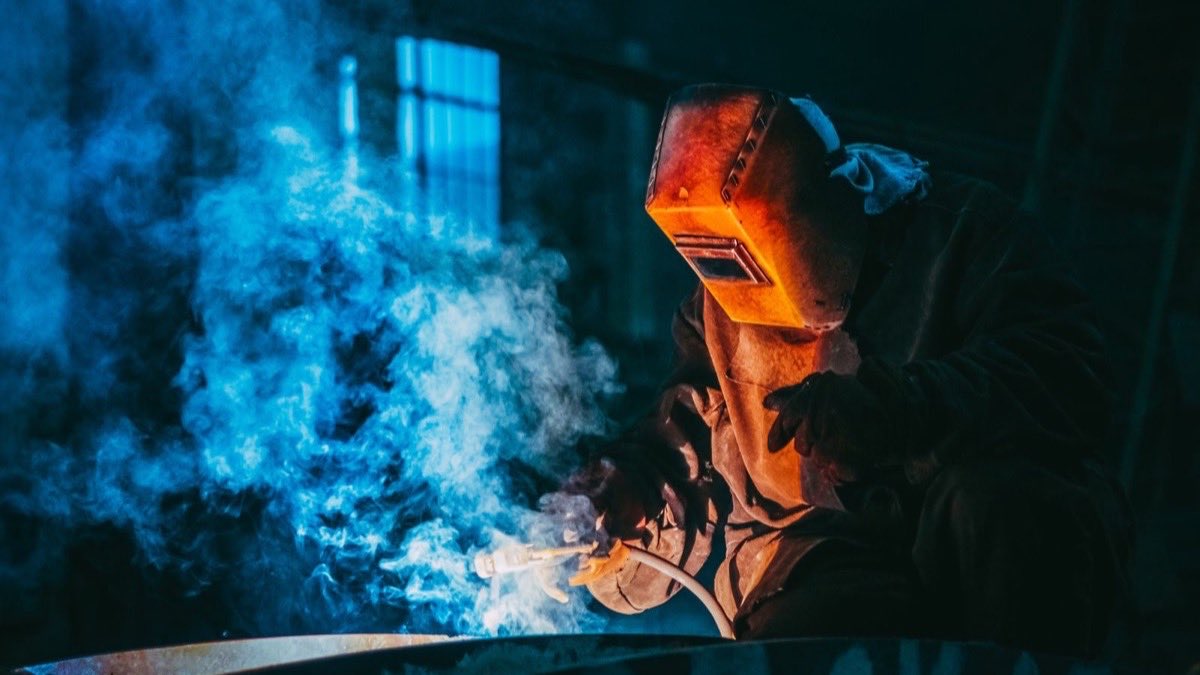
A welder joins, cuts, and repairs metal components by melting the base metal, a filler rod, or both, then letting the joint cool into a single, solid piece. On a typical day that means reading a blueprint or welding symbol to see exactly where and how deep a joint needs to run, setting up the machine and shielding gas for the right process, tacking parts into position, running the weld, then inspecting or testing it (visually, or with dye penetrant, X-ray, or ultrasonic testing on critical work) before it ships or gets signed off. Welders work across construction, manufacturing, shipbuilding, pipeline, automotive, aerospace, and custom fabrication, and the exact process, position, and material (mild steel, stainless, aluminum) changes by industry and employer.
That framing matters enormously for a resume. Employers are not looking for someone who can simply strike an arc, they are looking for someone who can produce a weld that passes inspection every time, on schedule, without wasting material or creating a safety hazard. A bad weld is not just rework, it can be a structural failure, so employers hire and pay for proven, certified, code-compliant skill. When you describe your experience in terms of certifications, processes, positions, and pass rates rather than a generic list of tasks, you immediately separate yourself from applicants who just wrote “did welding.”
Welder duties and responsibilities
Responsibilities vary by industry, material, and process, but almost every welder job description includes the core duties below, and understanding why each one matters helps you write stronger, more convincing resume bullets.
| Duty | Why it matters to employers |
|---|---|
| Reading blueprints, welding symbols, and work orders | Ensures the joint, material, and weld type match the engineering spec |
| Selecting and setting up the right process (MIG, TIG, stick, flux-core) | Matches weld strength, speed, and finish to the job and material |
| Fitting, tacking, and aligning parts before welding | Prevents warping, gaps, and costly rework on the final weld |
| Running welds in the required position (flat, horizontal, vertical, overhead) | Meets the structural and code requirements of the job |
| Inspecting, testing, and repairing welds | Catches defects before a part ships or a structure is signed off |
| Following safety procedures (PPE, ventilation, fire watch) | Prevents burns, fires, and toxic-fume exposure on the job |
Skills employers look for
The strongest welding resumes pair hard, certified skills with the soft skills that keep a shop or site running safely and on schedule. Name the specific processes and certifications from the job posting, that keyword match is exactly what the ATS scores you on.
| Hard skills | Soft skills |
|---|---|
| MIG, TIG, stick, and flux-core welding | Focus and steady hands under pressure |
| Blueprint and welding-symbol reading | Attention to detail and precision |
| AWS certification (for example, D1.1 structural steel) | Safety discipline and situational awareness |
| Metal fabrication and cutting (plasma, oxy-fuel) | Physical stamina in heat, noise, and confined spaces |
| Weld inspection and quality control | Reliability and pride in a clean, code-compliant weld |
“Welding resumes that win interviews do not just say ‘certified welder.’ They name the exact processes, positions, and codes: MIG and TIG, the 6G pipe position, AWS D1.1. One specific, verifiable line beats a whole page of generic duties.”
ResumeCroc resume team
How much do welders earn?
According to the U.S. Bureau of Labor Statistics, which tracks this work under Welders, Cutters, Solderers, and Brazers (SOC 51-4121), the occupation employs more than 416,000 people nationwide and pays a median wage of $53,750 a year (about $25.84 an hour). Pay climbs quickly with AWS certification, the number of processes and positions you can run, and the industry you work in: pipeline, structural steel, shipbuilding, and aerospace welding generally pay more than general fabrication because the certification bar, and the consequence of a bad weld, are both higher. Specialty niches such as certified pipe welding or underwater welding can pay well above the national median for welders who hold the right qualifications and can prove it.
Typical annual pay progression (illustrative)
Relative pay grows with certification, process range, and industry, exact figures vary by employer, location, and specialty.
Directional, based on U.S. Bureau of Labor Statistics occupation data for welders, cutters, solderers, and brazers (SOC 51-4121).
The takeaway for your resume: if you hold an AWS certification, can run multiple processes, have passed X-ray or ultrasonic inspection on your welds, or have experience in a higher-paying specialty, put those details front and center. They are the single fastest way to justify a higher wage and stand out from applicants who simply list “welding experience.”
How to put welder experience on your resume (5 steps)
The biggest mistake welders make is listing tasks instead of proof. Anyone can write “performed welding duties.” What gets interviews is specific, verifiable, certified skill. Follow these five steps.
Name your exact processes and positions
List every process you are proficient in (MIG/GMAW, TIG/GTAW, stick/SMAW, flux-core/FCAW) and the positions you can weld in (flat, horizontal, vertical, overhead, or the 1G through 6G pipe positions). This is precisely what employers and the ATS scan for.
Do: “Certified in MIG and TIG welding, qualified in the 3G and 4G positions on mild steel and stainless” · Not: “Did welding”
Put certifications and codes up top
Your AWS certification and any code qualification, such as AWS D1.1 for structural steel or ASME Section IX for pressure vessels and piping, are the first things a hiring manager checks, so make them specific and easy to find.
Do: “AWS D1.1 certified structural welder with 5 years on commercial steel-frame projects”
Quantify quality and output
Numbers turn a task list into proof. Weld or inspection pass rate, parts or feet welded per shift, rework rate, and projects completed on time all count.
Do: “Maintained a 99% first-pass inspection rate while welding 40-plus structural joints per week”
Lead every bullet with a strong action verb
Start with words like welded, fabricated, inspected, repaired, and qualified, never “responsible for.” Action verbs read as ownership of the result.
Do: “Fabricated and welded custom steel assemblies from blueprint to finished, inspected part”
Show safety discipline and reliability
A clean safety record and steady attendance matter as much as raw skill in a role where a mistake can cause burns, fires, or fume exposure. Say so directly.
Example: “Zero safety incidents over 3 years; trained 2 apprentices on proper PPE and fire-watch procedure.”
How your resume moves through hiring
Understanding the journey explains why keywords and certifications matter so much before you ever meet a hiring manager. Your resume usually passes through four stages before you get a call:
Will your resume pass the ATS?
Paste your resume and a job description into our free checker for an instant ATS score, the keywords you are missing, and prioritized fixes, all in your browser, nothing uploaded.
Frequently asked questions
Do you need certification to become a welder?
Not always, but it helps enormously. Many entry-level and general fabrication shops will train a reliable hire on the job, while structural, pipeline, and pressure-vessel work almost always requires a specific AWS or ASME code certification. If you are certified, lead your resume with the certification and the code it covers. If you are not yet certified, emphasize any trade-school training, apprenticeship hours, and the processes you already know.
What is the difference between a welder and a fabricator?
A welder specializes in joining metal with heat and filler material, while a fabricator typically handles the full build: cutting, bending, forming, and assembling raw metal, welding included. Many shops use the titles interchangeably, and welding experience transfers directly into fabrication roles. For a related, certification-driven blue-collar role, see our forklift operator job description.
How long does it take to become a certified welder?
Trade-school and community-college welding programs typically run a few months to two years, and an AWS certification test can be scheduled as soon as you can demonstrate the required skill on a specific process and position. Many welders start in an entry-level or apprentice role and earn certifications while working, which is a strong, honest story to tell on a resume.
What safety precautions do welders follow on the job?
Standard practice includes proper PPE (a welding helmet with the correct shade lens, flame-resistant clothing or leathers, and gloves), adequate ventilation or fume extraction, a fire watch for hot work near combustibles, and strict procedures around confined spaces and electrical safety. Employers value candidates who can speak to specific safety training and a clean incident record just as much as raw welding skill.
How do I make my welder resume stand out?
Name your exact processes, positions, and certifications, quantify your inspection pass rate and output, mirror the keywords in the job posting, and keep the format simple so it parses correctly. If you want a specialist to build it for you, explore our resume writing services or start with a free review below.
Is welding a good career?
Yes. It is in steady demand across construction, manufacturing, energy, and infrastructure work, pays well above many entry-level roles once you are certified, and opens a clear path into higher-paying specialties like pipe welding, inspection, and lead or foreman positions.
Want an expert to do it for you?
Our writers rebuild your resume to beat ATS filters and impress the human reading it. Start with a free, no-obligation expert review of your current resume.
 By uploading my resume, I agree to the