Before you apply, get a free expert review of your resume within 48 hours. See exactly what is holding it back, with an ATS check and real rewrite examples. No credit card, no obligation.
Get my free resume reviewKey takeaways
- An order picker (also called an order selector or picker-packer) selects and gathers items from warehouse racking to fill customer and store orders accurately and fast. The role is judged on pick rate, accuracy, and safety.
- The pickers who get hired and paid best show measurable impact: picks per hour, order accuracy, and a clean safety record.
- Most applications are read by software first, so mirror the exact words in the job posting (RF scanner, pick rate, WMS, safety) and keep the layout simple.
- Run your resume through our free ATS resume checker before you apply.
A clear order picker job description is the backbone of a fast, accurate warehouse or fulfillment center, and understanding it is just as important for anyone trying to turn warehouse shifts into a resume that gets interviews. Order pickers, sometimes listed as order selectors or picker-packers, read pick lists, locate items in racking, scan them, and gather accurate orders for shipping or the sales floor. It is fast, physical, target-driven work that keeps the supply chain moving. Below we break down exactly what an order picker does, the duties employers list, the skills that matter most, what the role pays according to federal data, and how to present it on a resume that beats the applicant tracking system (ATS).
What does an order picker do?
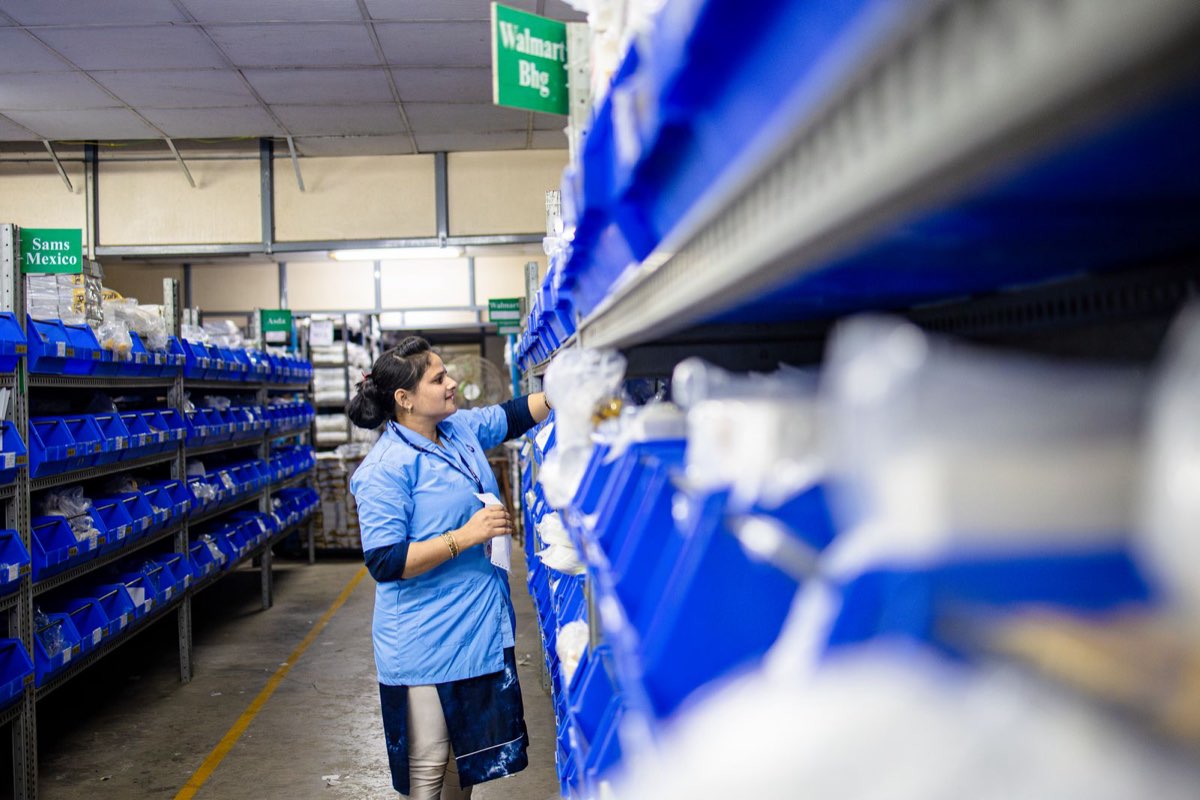
An order picker turns orders into ready-to-ship goods. On a typical shift they receive pick lists on a handheld RF scanner or voice system, travel through the warehouse to the right locations, select the correct items and quantities, and scan each pick to keep the inventory system accurate. They stage picked orders for packing or loading, replenish pick faces, report short or damaged stock, and work to a pick-rate target while following strict safety rules around equipment and racking. Accuracy matters as much as speed: a wrong pick becomes a customer complaint and a costly return.
That framing matters for your resume. Employers are not just looking for someone to grab items off shelves. They want someone who hits pick-rate targets, keeps accuracy high, and works safely, because a fast, accurate picker protects both output and customer trust. When you describe your work in terms of pick rate, accuracy, and safety rather than a list of tasks, you separate yourself from applicants who just wrote “picked orders.”
Order picker duties and responsibilities
| Duty | Why it matters to employers |
|---|---|
| Selecting items to a pick list accurately | Accuracy prevents costly errors and returns |
| Scanning picks with an RF or voice system | Keeps the inventory system correct in real time |
| Meeting pick-rate and productivity targets | Keeps orders shipping on schedule |
| Staging orders for packing or loading | Speeds up the next step in fulfillment |
| Replenishing pick faces and reporting shortages | Keeps the pick line full and accurate |
| Following safety rules around equipment | Prevents injuries and product damage |
Skills employers look for
Order picking is judged on speed, accuracy, and safety. Hard skills include using an RF scanner or voice-pick system, reading pick lists, basic warehouse-management-system use, and safe manual handling. The soft skills matter too: focus, stamina, dependability, and disciplined safety habits. A strong pick-rate record and a clean safety and attendance record are powerful differentiators.
A picker who is fast, accurate, and safe is exactly who every warehouse wants, so make your pick rate and accuracy easy to see.
How much do order pickers earn?
According to the U.S. Bureau of Labor Statistics, hand laborers and material movers earn a median wage of roughly 16 dollars an hour, with more for experienced pickers, night shifts, and equipment-certified roles. Pay rises with pick rate, accuracy, and cross-training on packing, receiving, and forklift operation, and the role is a common stepping stone to lead, forklift, and inventory-control positions.
How to put order picker experience on your resume (5 steps)
Mirror the job posting’s keywords
Pull the exact terms from the listing, such as “RF scanner,” “pick rate,” “WMS,” “voice pick,” and “safety,” and use them where they truthfully apply. This is what the ATS scores.
Do: “Picked 120-plus lines per hour with an RF scanner at 99.8% accuracy” · Not: “Picked orders”
Quantify pick rate and accuracy
Numbers are what set a picker resume apart. Picks or lines per hour, order accuracy, and units moved all count.
Do: “Consistently exceeded the pick-rate target by 15% while holding accuracy above 99.5%”
Put safety front and center
A clean safety record is a real differentiator in warehousing, so make it prominent and specific.
Do: “3 years with a zero-accident safety record and full compliance with warehouse procedures”
Lead every bullet with a strong action verb
Start with words like picked, scanned, staged, and replenished, not “responsible for.” Action verbs read as ownership.
Do: “Staged and scanned outbound orders to keep the packing line running without gaps”
Show range and reliability
List the systems and equipment you can run and note perfect attendance. Range and dependability make you cheaper to schedule and train.
Do: “Cross-trained on packing, receiving, and pallet jack; perfect attendance over 2 years”
Will your resume pass the ATS?
Paste your resume and a job description into our free checker for an instant ATS score, the keywords you are missing, and prioritised fixes, all in your browser with nothing uploaded.
Frequently asked questions
Do you need experience to be an order picker?
No. Order picking is a common entry-level warehouse job, and most employers train on the job. Lead your resume with reliability, accuracy, and any warehouse or physical-work experience. For a related role, see our warehouse associate job description.
What makes an order picker resume stand out?
Quantified pick rate and accuracy, a clean safety record, the systems and equipment you can operate, and a simple, ATS-friendly layout that mirrors the job posting.
Is order picking a good warehouse job?
Yes. It is in steady demand, and reliable, accurate pickers are often first in line to be cross-trained onto forklifts and into lead and inventory-control roles.

 By uploading my resume, I agree to the